
ESG & Responsible Sourcing
Compliance does not fail in your office. It fails at the factory gate.
Environmental, social, and governance requirements now reach straight through to the factory that makes your product. If your supplier cannot produce the evidence, the goods do not ship. We verify the factory on the ground in China — labour, environment, and traceability — and hand you documentation you can pass up your own supply chain.

Why This Lands on You
This is not a values statement. It is a shipping requirement. Buyers in Europe and North America increasingly have to prove that what they import was made without forced labour and without environmental violations — and their regulators do not stop at the first tier. The obligation flows down the chain, and it lands on you.
The chain works like this: your customer faces a due-diligence law or a buyer code of conduct, so they turn to you for evidence. You turn to your Chinese supplier, who either cannot produce the documents or produces ones nobody can verify. That is the point where orders stall, shipments get held, and contracts are lost — not because of anything you did wrong, but because nobody checked the factory.
We do that checking on the ground, before it becomes your problem.

What We Cover
We assess a supplier across four pillars — the same four that sit behind most buyer codes of conduct and due-diligence questionnaires:
Labour & Human Rights
No child labour and no forced, bonded, or prison labour.
- Age verification and young-worker protections
- Freedom of movement, retention of ID documents, and contract terms
- Working hours and rest days against Chinese statutory limits
- Wages at or above the legal minimum, with lawful overtime pay
- Freedom of association and grievance mechanisms
- Migrant and dispatch-labour arrangements
Environment
Permits, discharges, and waste handled within the law.
- Environmental impact assessment and discharge permits
- Wastewater, air emissions, and noise controls
- Hazardous-waste handling and licensed disposal
- Chemical storage, labelling, and handling
- Energy and water use, where the buyer reports on it
Health & Safety
A workplace that will not generate an incident report.
- Fire safety: exits, alarms, extinguishers, drills
- Personal protective equipment provided and used
- Machine guarding and electrical safety
- Worker injury insurance and incident records
- Dormitory and canteen conditions, where applicable
Traceability & Materials
Knowing where the materials actually came from.
- Origin of key raw materials and components
- Conflict-minerals screening (tin, tungsten, tantalum, gold)
- REACH and RoHS restricted-substance compliance
- Sub-supplier and outsourced-process mapping
- Chain-of-custody documents where the buyer needs them
Regulations We Work Against
We map each supplier against the rules that actually apply to your market. The most common ones we prepare evidence for:
| Regulation | Jurisdiction | Who it bites | What we prepare |
|---|---|---|---|
| CSDDD — Corporate Sustainability Due Diligence Directive | EU | Large EU companies, and the suppliers they push requirements down to | Supplier due-diligence file: policies, risk assessment, and evidence of verification |
| UFLPA — Uyghur Forced Labor Prevention Act | US | Anyone importing goods US Customs considers at risk of forced labour | Supply-chain mapping, material origin, and documents to rebut a detention |
| Modern Slavery Acts | UK, Australia, and others | Importers above revenue thresholds, published annually | Supplier statements and audit evidence to support your own published statement |
| EU Conflict Minerals Regulation | EU | Importers of tin, tungsten, tantalum, and gold | Smelter and refiner identification and OECD-aligned due diligence |
| EUDR — EU Deforestation Regulation | EU | Importers of forest-risk commodities (timber, rubber, and more) | Origin and geolocation evidence, where the product is in scope |
| CBAM — Carbon Border Adjustment Mechanism | EU | Importers of steel, aluminium, cement, and other covered goods | Production data and emissions information from the factory |
How We Do It
Three levels, in order. Most problems are found by the second.
Level 1 — Document review
We collect and check what the factory can actually produce: business licence, social insurance contribution records, environmental permits, and any existing audit reports. Social insurance records matter more than most buyers realise — they show a factory is paying workers through the formal system, which is a strong signal against hidden informal labour. This level is done remotely and catches obvious gaps and forgeries.
Level 2 — On-site assessment
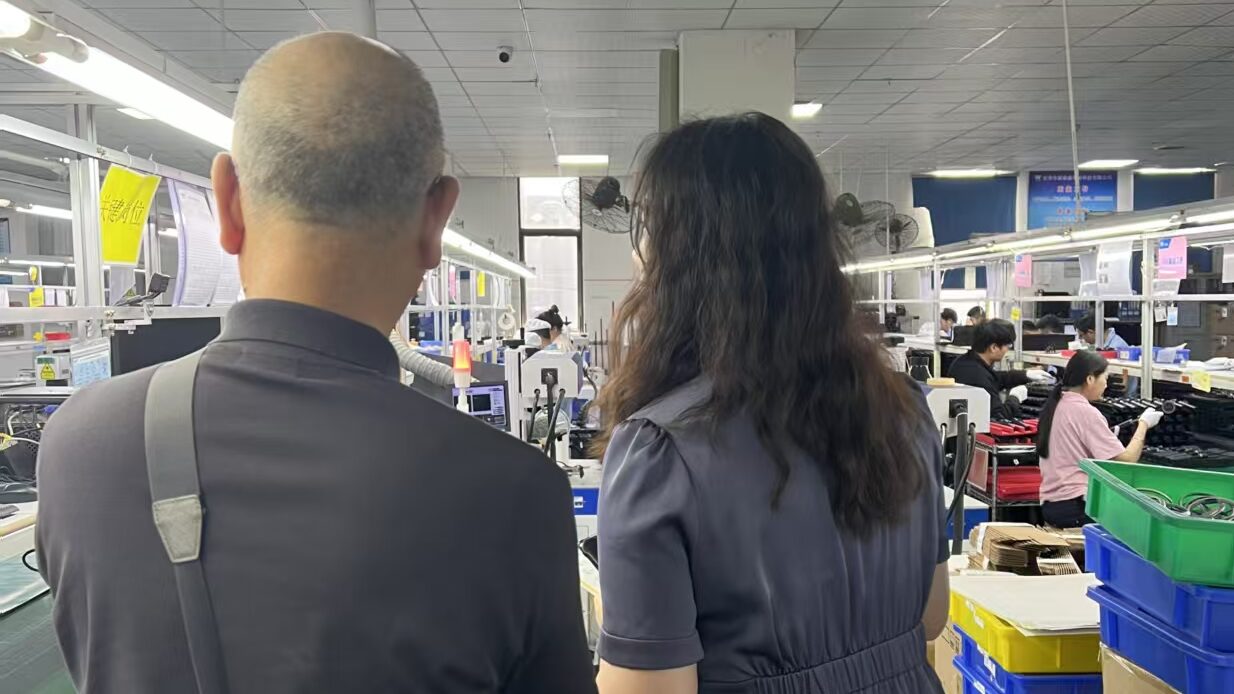
Our Shenzhen team goes to the factory. We walk the floor, verify records against reality, and — critically — interview workers privately, in their own language, away from management. We cross-check what we are told against payroll, attendance, and production records. This is where a factory’s real conditions surface, and it is something no remote questionnaire can do.
Level 3 — Follow-up and monitoring
Findings are graded by severity (critical, major, minor), and where there are gaps we agree a corrective action plan with deadlines and check that it is closed out. For ongoing supply we can re-verify on a schedule so your evidence stays current.
What You Receive
Everything below is written so you can pass it to your own customer or your regulator without rewriting it:
- Assessment report — findings by pillar, graded by severity, with photographic evidence
- Document pack — licences, permits, insurance records, and certificates, verified
- Corrective action plan — what needs fixing, by when, and evidence of closure
- Traceability summary — material origins and sub-supplier mapping where required
- Compliance statement — a plain-English summary you can quote in your own reporting
Certifications We Check
Many Chinese factories already hold third-party certifications. We verify which ones genuinely apply to the site and process you are buying from — not just the certificate on the sales deck.
| Certification | Covers |
|---|---|
| SA8000 | Social accountability and labour rights |
| ISO 14001 | Environmental management systems |
| ISO 45001 | Occupational health and safety |
| BSCI / SMETA (Sedex) | Ethical-trade social audits |
| EcoVadis | Cross-cutting sustainability rating |
| RBA | Responsible Business Alliance code of conduct |
| GRS / FSC | Recycled content / responsible forestry, where relevant |
A certificate is a snapshot, not a guarantee. It is valid on the day it was issued, for the scope it names. We use certifications as one input — never as a substitute for checking the actual site. Any assessor who tells you a certificate removes the need to look at the factory is selling you comfort, not compliance.
How This Is Priced
ESG assessment is carried out within our existing audit and inspection rates — you do not pay a separate ESG premium:
| Scope | Basis |
|---|---|
| Document review (Level 1) | Included with any on-site assessment |
| On-site ESG assessment (Level 2) | USD 320 per assessor-day — our standard factory-audit rate. Deeper multi-day ESG programmes from USD 520 per day. |
| Inspection against specification (Level 3) | USD 340 per inspector-day — our standard quality-inspection rate, where ESG checks run alongside |
| Multi-factory or supply-chain traceability | Quoted per project, based on the number of sites and materials |
Travel outside Guangdong is charged at cost. Everything is a fixed fee agreed before we start — we do not bill by the hour.
If you need us to buy and deliver the product as well, see our procurement agency and trading & fulfilment services. This page covers the verification and documentation on its own.
Frequently Asked Questions
Does the EU CSDDD apply to my company?
The directive as revised in 2026 targets very large EU companies, with the main obligations phasing in from July 2029. If you are a smaller buyer it probably does not apply to you directly — but your larger EU customers are in scope, and they will push due-diligence requirements down to you. That is why buyers ask for this evidence even when the law is not aimed at them.
Can my goods be stopped at US customs?
Yes. Under the Uyghur Forced Labor Prevention Act, goods from certain regions and industries are presumed to be made with forced labour and can be detained unless the importer can present a documented due-diligence trail. The burden is on the importer to prove the goods are clean, not on customs to prove they are not.
What evidence can a Chinese factory realistically provide?
Most can provide a business licence, social insurance records, and environmental permits, and many hold third-party audit reports. What they rarely provide proactively is the record of what happens on the floor — working hours, wages, and sub-supplier arrangements. That is why a document review is a starting point, not an answer.
Do you interview workers, and in what language?
Yes. Worker interviews are one of the most useful tools we have, and they are done privately, in the workers’ own language, without management present. As a Shenzhen-based team we do this in Mandarin and local dialects — something a distant third-party questionnaire cannot replicate.
Are certifications like SA8000 or SMETA enough?
No. A certificate covers a defined scope on a defined date. It is useful evidence, but it does not tell you what is happening on the floor today, or whether the processes you are actually buying were in scope. We treat certificates as one input and verify the site regardless.
How long does an assessment take and what does it cost?
A document review is usually done within a few working days. An on-site assessment is typically one to three assessor-days depending on the size of the factory and the depth of scope, at our standard rate of USD 320 per assessor-day, with travel at cost outside Guangdong. You receive a written quotation and scope before we begin.
Need the factory verified?
Tell us the product and the market you sell into — we will confirm what evidence your supply chain needs and assess the factory against it.
Free: the Supplier Verification Checklist
The same 10-point checklist our inspectors use before a first order, as a printable PDF. Leave your email and it is yours – no strings attached.